A Multi Unit Cleanout Case Study for Turnovers
A vacant apartment can look manageable until there are six more just like it. Old furniture, bagged trash, broken appliances, mattresses, shelving, and abandoned personal items can quickly turn a routine turnover into a major hauling job. This multi unit cleanout case study shows why one organized crew, one clear plan, and one all-inclusive quote can make a real difference for a property owner.
The details below reflect the type of work involved when a landlord or property manager needs several units cleared on a deadline. Every building is different, but the challenges are familiar: limited access, busy tenants nearby, mixed materials, and the need to get units ready for repairs, cleaning, and new occupants without unnecessary delays.
The Cleanout Challenge
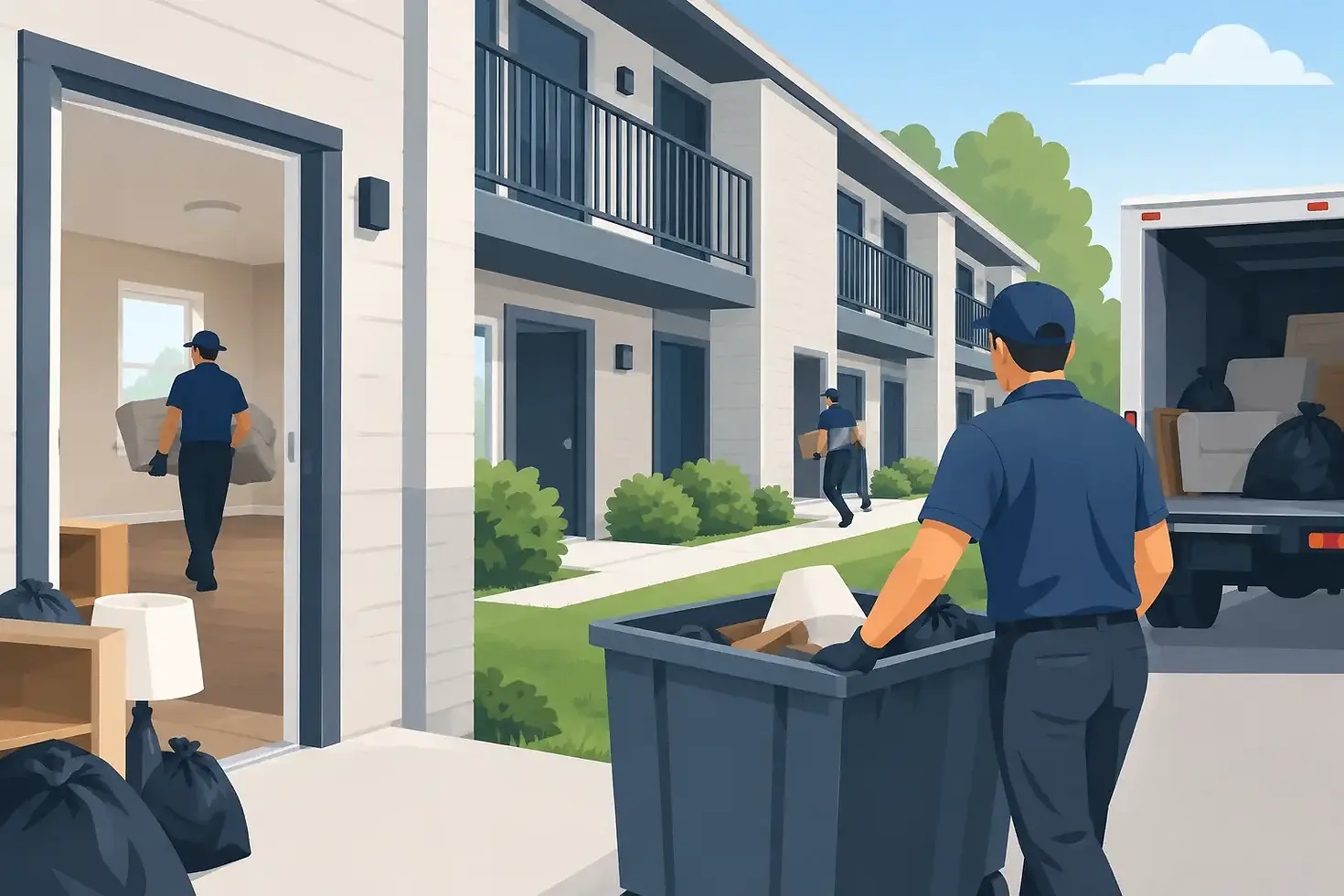
The property in this example was a small multi-family building with several recently vacated units. Each unit had a different amount of material left behind. One had a living room full of worn furniture. Another had boxes, clothing, kitchen items, and loose trash. A third included a damaged refrigerator, old carpeting, and debris from a tenant's attempted repairs.
The owner did not need a dumpster dropped off for days while they found labor and figured out what could go where. They needed the material gone, the common areas protected, and the building ready for the next stage of turnover. That is where a full-service cleanout crew makes sense.
The main concern was not simply removing junk. It was keeping the project moving without creating new problems. Hallways had to stay clear. Stairs had to be used carefully. Parking and truck access needed to be planned around neighbors and normal activity at the property. The owner also wanted to know the total cost before work began, rather than receiving separate bills for labor, hauling, and disposal.
A Multi Unit Cleanout Case Study Starts With a Walkthrough
Before removal begins, the best first step is a walkthrough of every unit and shared area. A quick look at one apartment is not enough when the job involves multiple floors, a basement, garages, or exterior spaces. The crew needs to see what is being removed, where it is located, and what access issues could affect the work.
For this project, the walkthrough identified several factors that shaped the plan. Some large items had to come down a narrow stairway. A few pieces of furniture could be broken down safely to make removal easier. Appliances required special handling. Loose debris had to be bagged and loaded in a way that kept the truck organized and prevented repeated trips.
The walkthrough also gave the owner a chance to point out what was staying. This matters more than people think. In a multi-unit building, there may be maintenance supplies, tools, stored materials, or fixtures that should not be removed. Clear direction at the beginning helps avoid confusion once the work is underway.
After reviewing the job, the owner received a free estimate with an all-inclusive price. That means the quote covered the labor, loading, hauling, and disposal costs connected to the job. For a property turnover, that kind of pricing makes budgeting much easier. The owner knows what the cleanout will cost before scheduling cleaners, painters, or contractors.
Organizing the Work by Access and Volume
A multi-unit project is more efficient when the crew works through the building in a logical order. Instead of filling a truck with a few items from every unit, the team can clear one area at a time while keeping the loading process organized.
In this case, the work began with the unit that had the largest furniture and the most difficult access. Removing bulky pieces first opened up the rooms and gave the crew more space to handle smaller material. It also prevented the heaviest items from becoming an end-of-day problem when the truck was already full.
Next came units with bagged trash, boxes, and household clutter. These jobs can move quickly when the team has enough labor to load continuously and enough truck space to avoid stopping every hour to rearrange materials. The final pass included common-area debris, items left near the curb, and materials in the basement storage area.
Not every multi-unit cleanout requires the same approach. A building with elevator access may allow faster removal from upper floors. A property with tight city parking may require more careful truck placement. A renovation cleanout may involve heavier construction debris than a standard tenant move-out. The right plan depends on the property, the volume of material, and the schedule.
What Made the Difference on This Job
The biggest benefit was that the owner did not have to coordinate several separate services. There was no need to hire movers for furniture, rent a truck, find help for the stairs, and then make multiple disposal runs. One insured hauling crew handled the lifting, loading, transportation, and disposal.
That convenience matters, but so does safety. Mattresses, appliances, broken furniture, and heavy bags can cause injuries when people try to rush a cleanout with limited help. Multi-unit buildings add more risk because crews are moving items through stairwells, doorways, and shared walkways. A professional team brings the labor and equipment needed to work carefully while keeping the job moving.
The cleanout also helped protect the turnover schedule. Once unwanted material was removed, the owner could see the actual condition of each unit. Damaged walls, stained flooring, missing fixtures, and needed repairs were no longer hidden behind piles of belongings. Maintenance and cleaning could begin right away instead of waiting for the owner to slowly clear each space.
For landlords and property managers, that visibility is valuable. Empty units do not generate rent, and delays can add up. A fast cleanout will not solve every repair issue, but it removes one major obstacle between a vacancy and a ready-to-rent unit.
When Full-Service Hauling Beats a Dumpster
Dumpster rentals can be useful for long renovation projects where a contractor or owner has workers on site each day. They are often a good choice when materials will be generated over time and someone is available to load the container.
A full-service cleanout is usually the better fit when the goal is to clear a property quickly with minimal involvement from the owner. The hauling crew does the physical work. They carry material from apartments, basements, garages, and common areas, then load it into the truck and remove it from the property.
The trade-off comes down to labor and timing. If you have a crew ready to load debris over several days, a dumpster may be practical. If you need several units cleared promptly and do not want to handle heavy lifting, sorting, or disposal runs, professional junk removal can save time and headaches.
Planning Your Next Building Cleanout
A smoother cleanout starts before the crew arrives. Property owners should identify which units, rooms, storage spaces, and outdoor areas need attention. If there are items that must remain, label them or move them to a separate area whenever possible. Let the hauling team know about staircases, elevators, tight hallways, parking restrictions, locked spaces, appliances, or especially heavy materials.
It also helps to schedule the cleanout before cleaners and repair crews arrive. Having multiple teams working around piles of junk can slow everyone down. A clear order of operations is usually best: remove unwanted material first, assess repairs next, then clean, paint, and prepare the unit for showings.
For Rhode Island landlords, facility managers, and property owners facing a tough turnover, Chris's Junk Removal keeps the process simple: You Call, We Haul! A free estimate and a clear scope of work can turn a building full of leftover material into a clean starting point for whatever comes next.
A multi-unit cleanout does not have to become a drawn-out project. With the right crew and a plan that fits the building, the path from vacant and cluttered to cleared and ready can be much shorter.


Comments